
Quick Summary:
- Brand: Vivobarefoot (UK)
- Price: £150 / $190 as of Feb 2026
- Website: Vivobarefoot Website (or Revivo if available!)
- Style: Sandal, casual
- Materials: 100% Namibian Eland Leather – including the sole!
- Barefoot Rating: 4/5
- Zero Drop: Yes!
- Wide toe area: Moderate; suitability depends on toe shape (less suitable for longer big toes).
- Thin, flexible sole: Not particularly thin, but remain flexible on account of being fully leather.
Vivobarefoot San Dal II Review Verdict: A beautifully made, niche sandal. Best for narrower or Greek-shaped feet and those who value natural materials over functionality in urban environments.
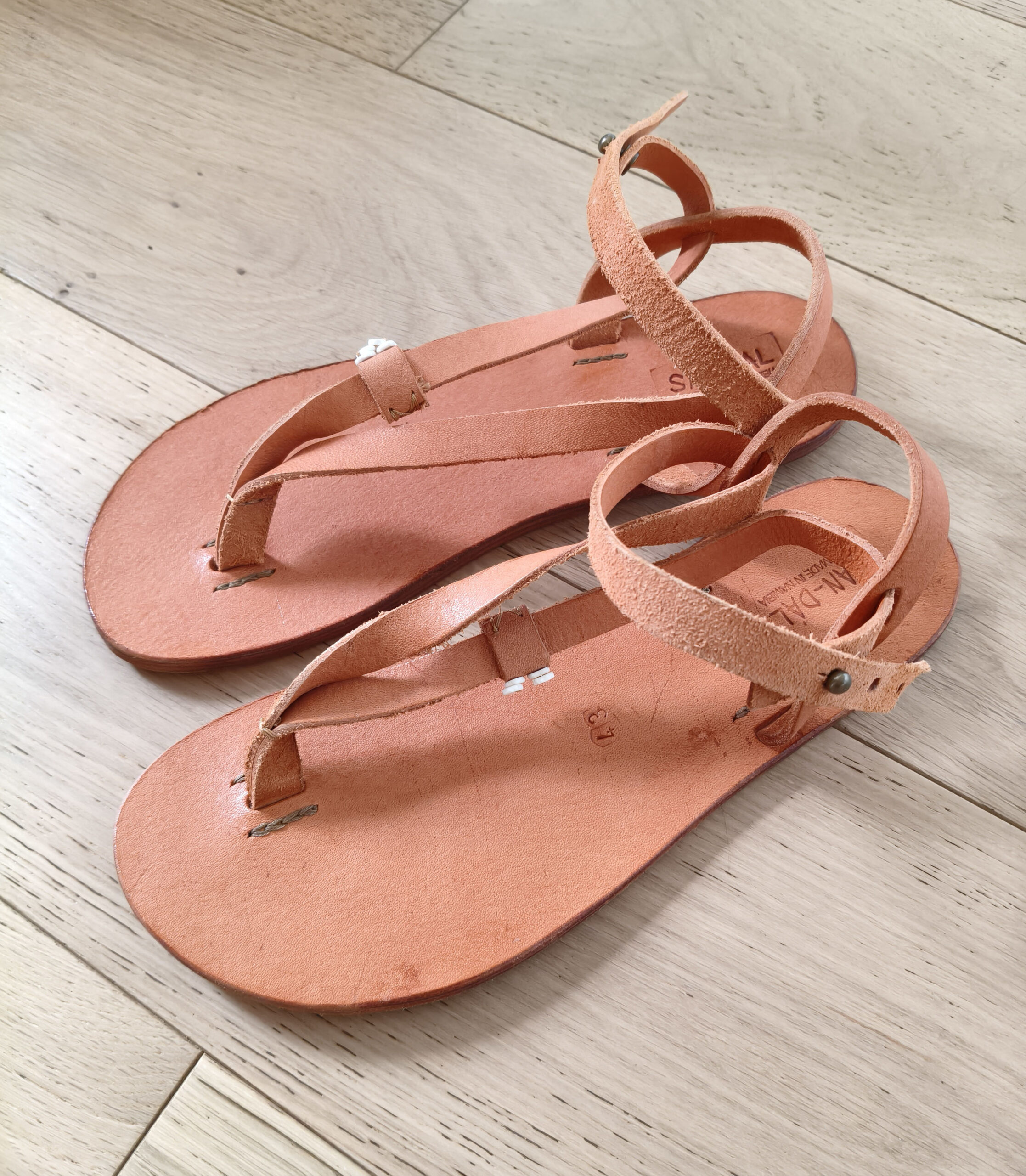
This iteration of the “San Dal” has been dubbed the San Dal II. One notable difference to the original is the fastening method of the ankle strap. The long ankle-wrap has been replaced with a more practical metal fastener that goes across the front of the ankle. The three holes in the strap make it adjustable.
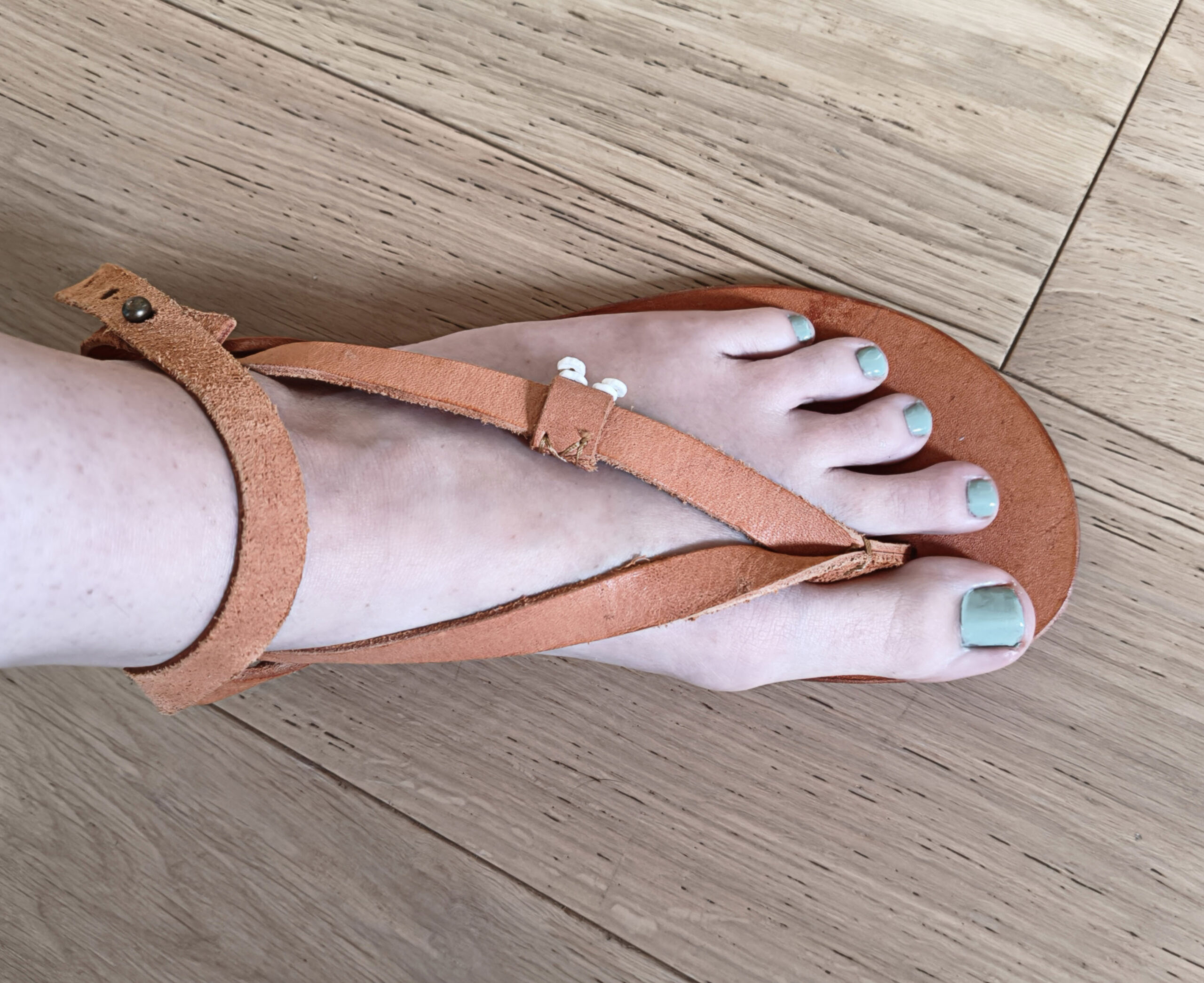
The Eland leather is excellent quality: thick, durable, and gives the sandals a rugged feel. A small shell detail on the outer foot strap, can be moved up and down, adding a nice decorative touch that fits with the rest of the vibe. The leather sole means they will have surprisingly good ground feel, considering the thickness. Note that leather soles can be slippery on wet unnatural surfaces, but grip is good on dry natural surfaces.
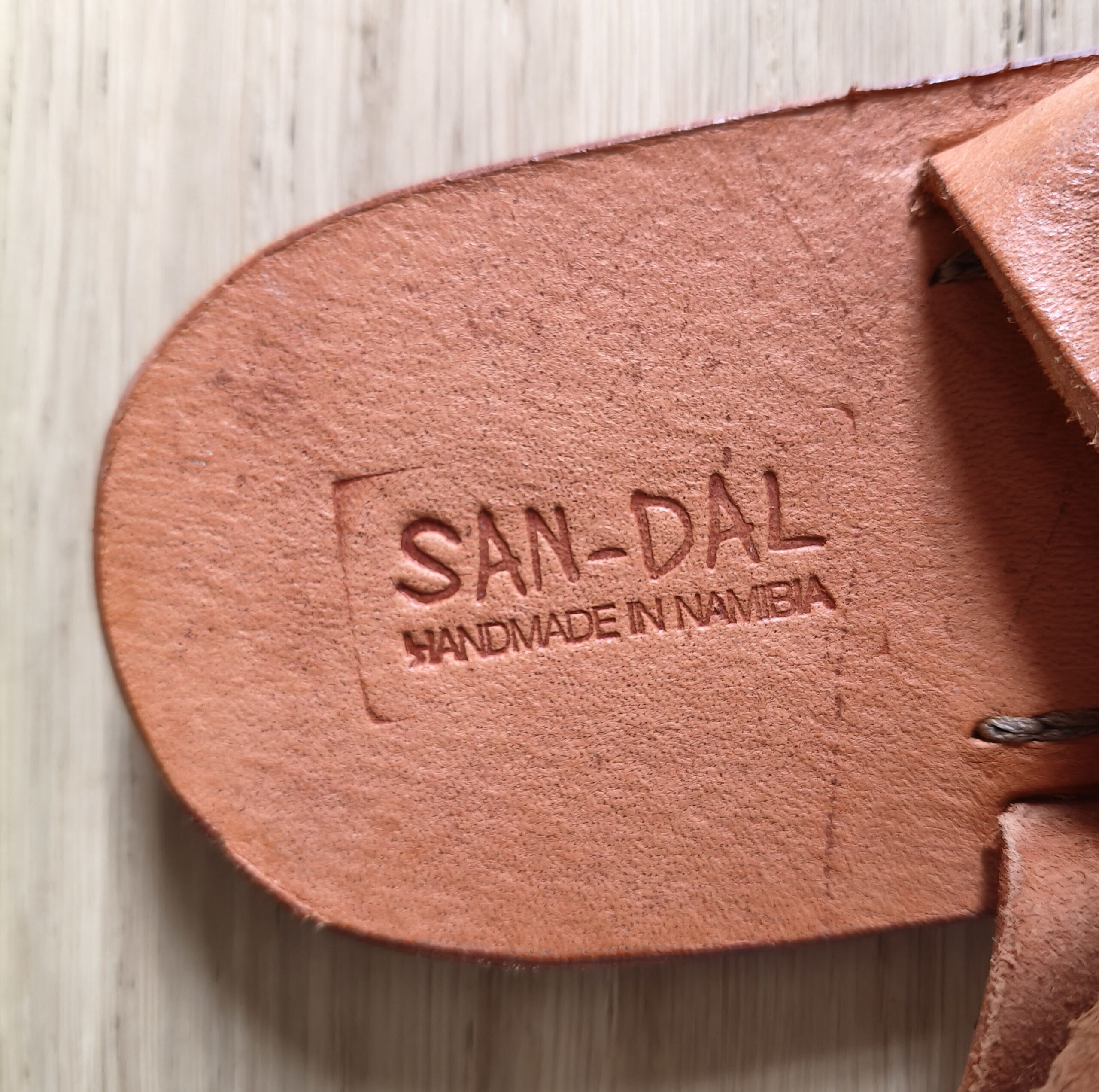
The “San Dal” is for its collaboration with the Ju’/hoansi San group from Southern Africa. The use of Eland leather is a nice touch, as it is both tougher and more supple than those made from cow leather.
The straps are stitched into the sole using a thick ‘sinew’ style thread. For those with particularly sensitive feet, particularly between their toes, this might cause some intial discomfort. Expect a short break-in period as the leather softens and conforms to the foot.
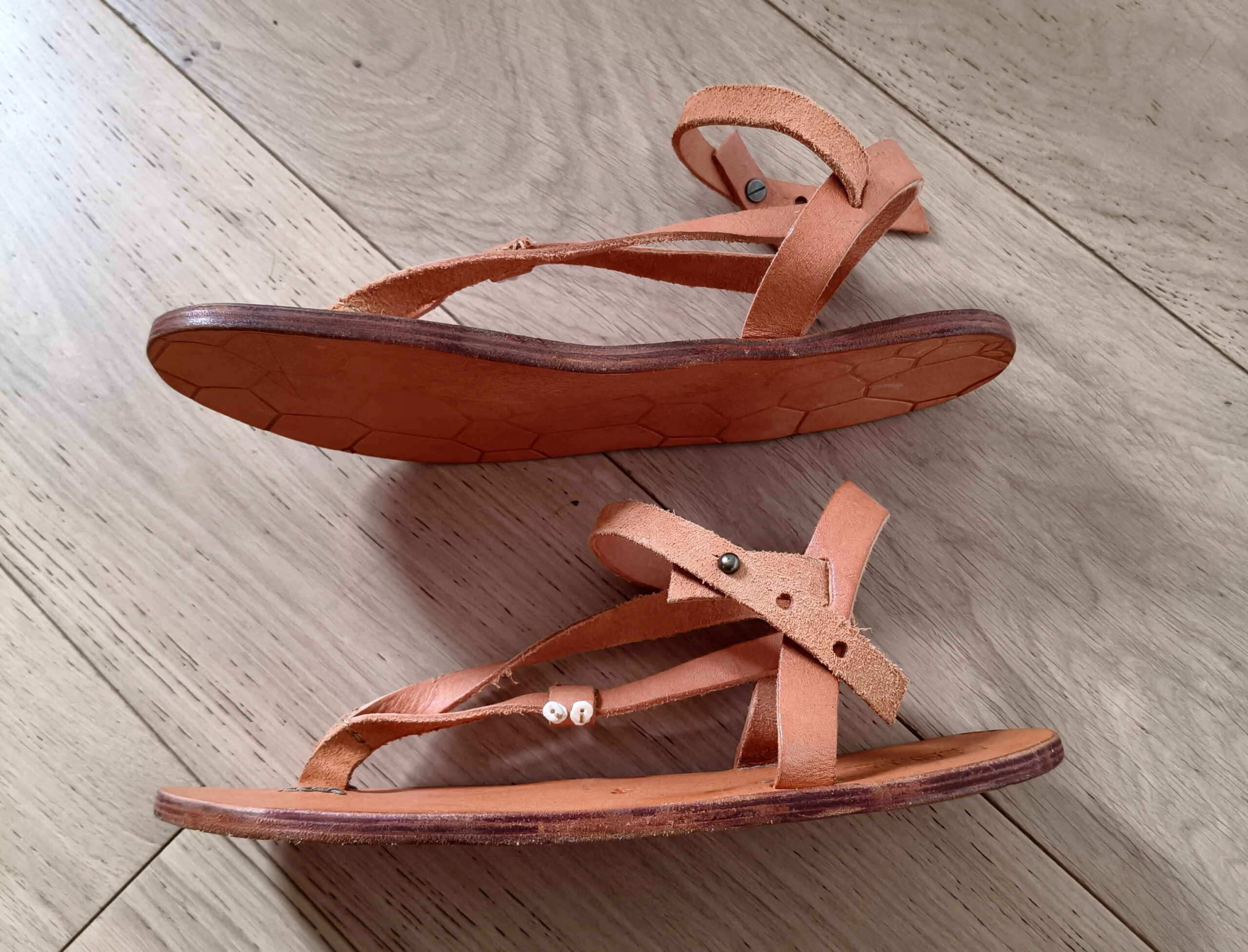
The primary straps from the toe post feed through the rear ankle strap, meaning it’s simple to adjust the overall fit as the strap is continuous. The rear strap that hugs the heel is fixed.
With only three adjustment holes over the ankle, those with slimmer ankles may need to create an additional hole in the leather strap for optimum fit. I imagine a leather worker or cobbler would handle this easily, if you do not want to risk a DIY solution.
Personal Fit
As much as I adore the design, quality, and price (thanks to Revivo!), these were not kept. My usual shoe size is an EU 43, with a 27cm foot length, and these were slightly too long and the wrong shape for my ‘Egyptian’ toe profile.
You can see in the images with them on the foot that my big toe needs more room on the inside and is in danger of falling off the sole. Keep in mind that toes splay more during movement than at rest, so this is clearly not enough width for me. There is also quite a bit of space both before my heel and in front of my toes. Sizing down would not solve this issue, simply because the toe area would then be too narrow.
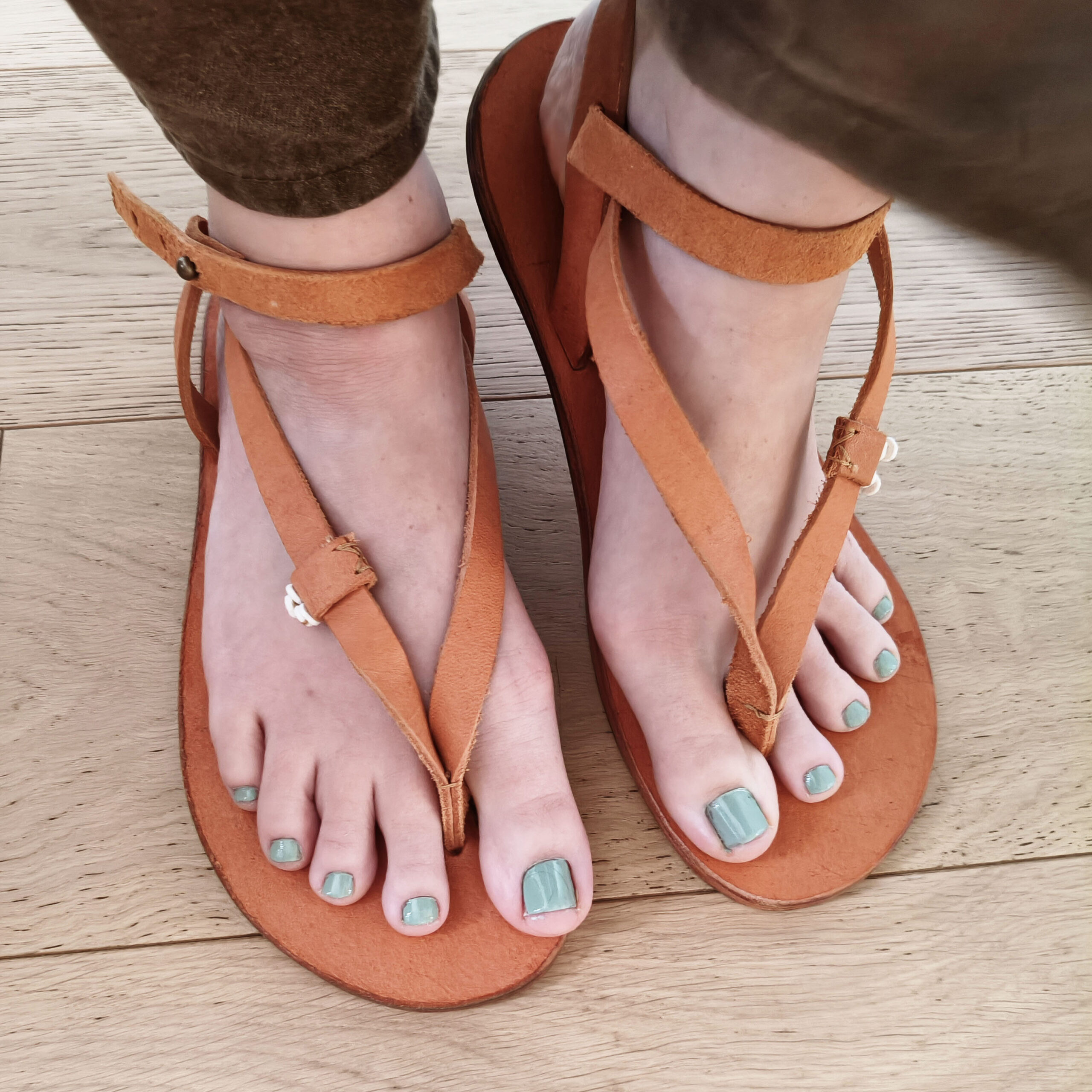
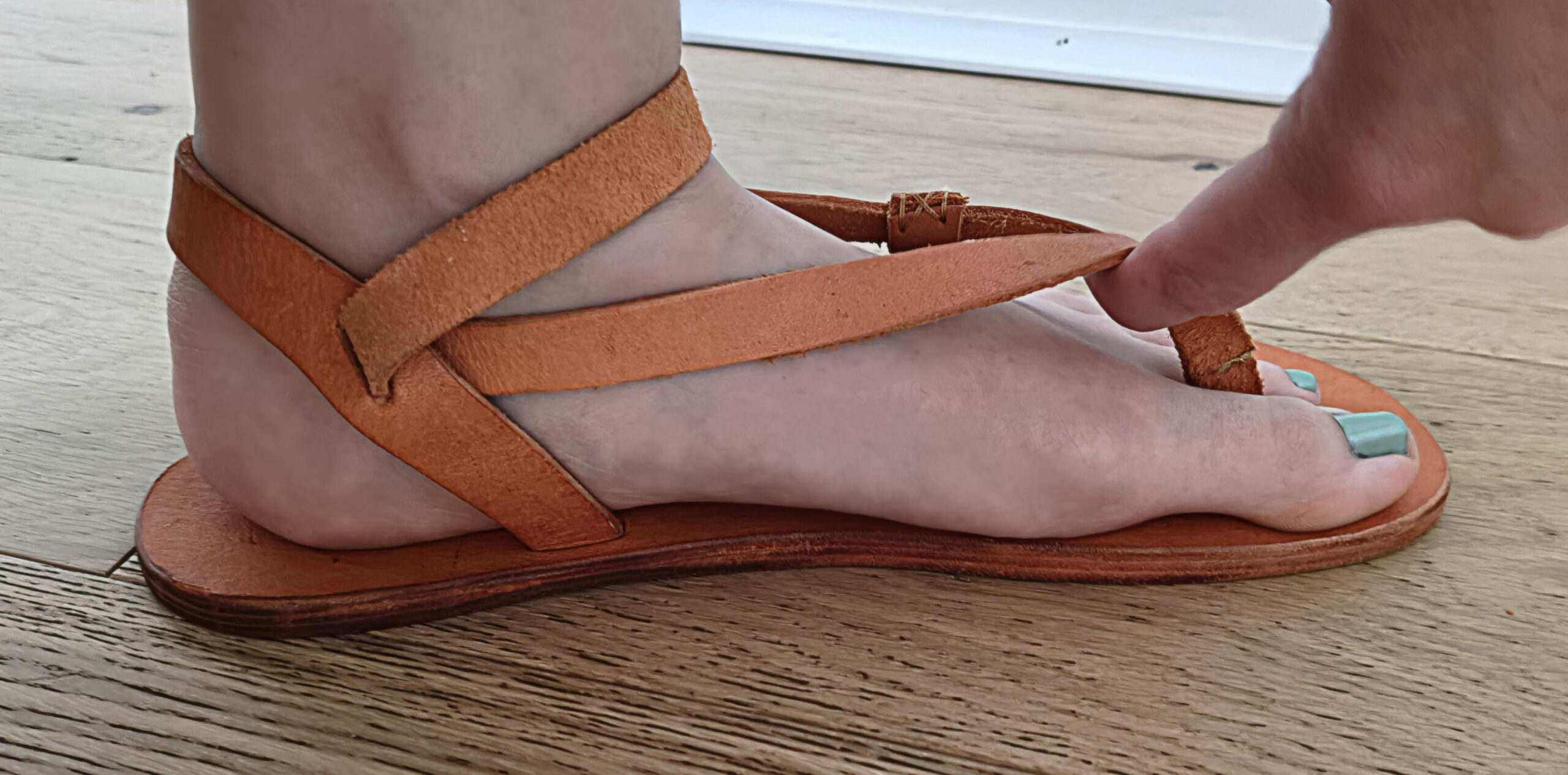
Perhaps due to the slightly large size, I found that the upper strap had a bit too much slack, even when tightened on the tightest adjustment. However, the loose straps over the foot didn’t significantly affect security. Once the ankle strap was pulled secure around the ankle, it did a good job of keeping the foot in place.
These sandals would suit a ‘Greek’ toe shape (second toe longer than big toe) better.
Vivobarefoot have varying toe shapes and widths across their range, but in general are not considered to be one of the wider brands. Some models can work for Egyptian shapes, but this is unlikely to be one of them.
The high price point of the San Dal II is reflected in the workmanship and material quality. They should last well and handle heavy use, aside from the obvious “weak point” of the full leather sole, which will wear faster on pavement but suits those walking on natural ground.
I hope you have found this Vivobarefoot San Dal II Review useful. Rememember to get in touch here if you have further questions!