Reading up on and researching which barefoot shoes to buy can be overwhelming. I’ve put together this 3 step cheat sheet to stop the decision paralysis – in my opinion the best way to sell the barefoot experience is to just wear them and see how much better they feel! You will of course have to start slow as your feet and body adjust.
The information is for everyone of all abilities and all ages who want to get started ASAP. There is always time to delve deeper later – here you can find low cost options that require very little ‘buy-in’ to get started. Read on to find out how to start wearing barefoot shoes.
Ad/Affiliate Disclosure:
This page contains affiliate links. If you buy something through one of these links, I may receive a commission at no extra cost to you.
Step 1: Measure Your Feet
Barefoot retailers almost always list the interior length of the shoe, if not the sole length. This takes out lots the guesswork of sizing – don’t just order your ‘usual size’. It can vary too much between brand and even within brands.
When you have your foot length, e.g., 27cm, add some wiggle room for your toes. How much this should be depends on type of shoe, if your feet are growing, etc. Most adults are fine with approximately 1cm extra space in most shoes. Less for sandals or if you like a closer fit. More for boots you will wear with thick socks. Children may need 1.2cm for growing room.
Accurately measure your foot length using one the following methods below:
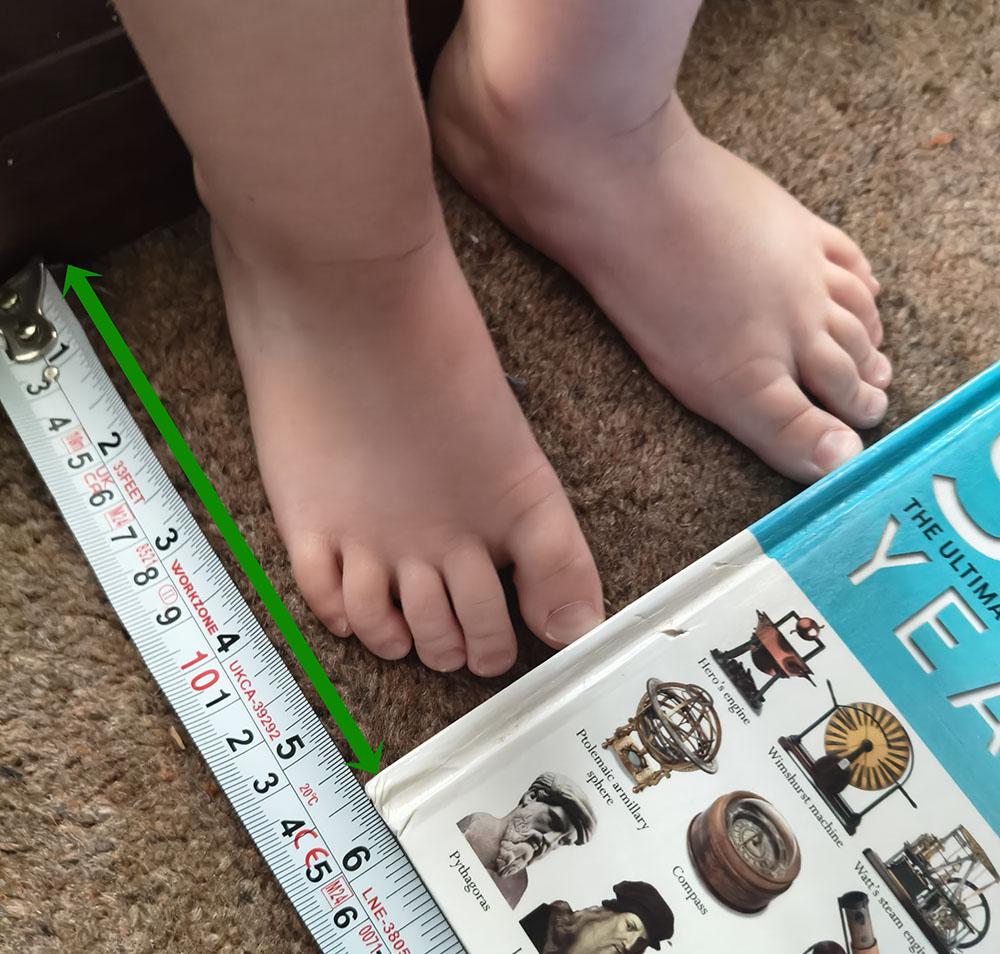
The Wall Method (faster):
- Stand with your heel against a flat hard surface, like a wall.
- Place a hard, straight object (like a book) parallel to the wall at the end of your longest toe. Make sure you are putting your weight on your foot.
- Remove your foot and measure the distance from the wall to the object to get your foot length in centimetres or inches.
- Repeat with the other foot, in case of size variation. Take the longest measurement as your length.
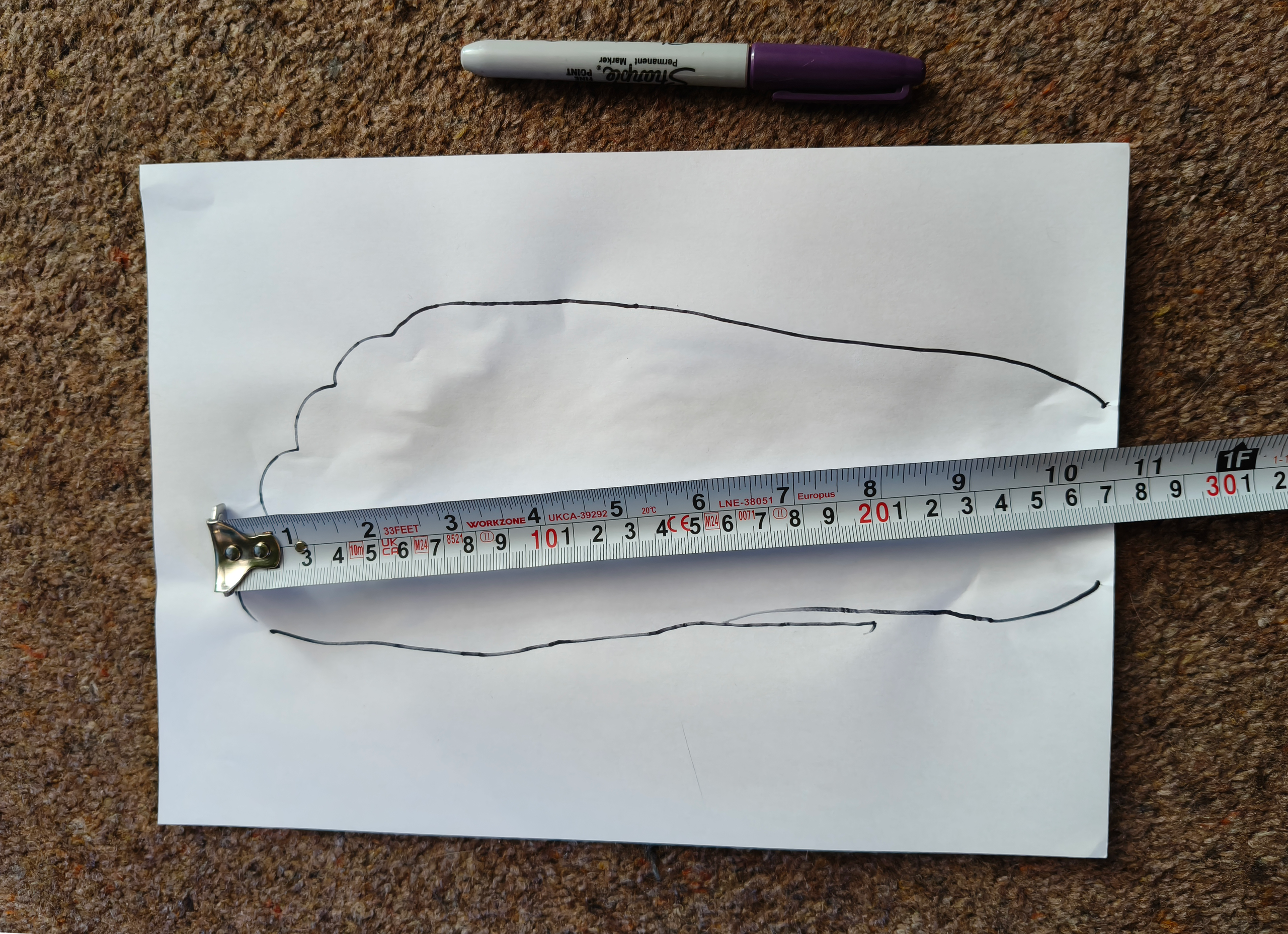
The Paper Tracing Method (more detailed):
- Get a sheet of paper that is longer than your foot. A4 / Letter works for most.
- Place the paper on (preferably) a hard floor against a flat vertical surface like a wall and step onto it. Make sure your heel is back against the wall.
- Trace around your foot, keeping the pen or pencil vertical. You can’t go behind the heel – don’t worry. Just do a rough outline of the toes, not between each one!
- Step off and measure from the centre of the back edge of the paper to the end of your longest drawn toe – you can draw a line direct even if it’s diagonal, or measure from a perpendicular line across (see the infographic below).
- This method also allows to measure width: just measure the widest point of your foot tracing. Some retailers sell multiple widths, or at least provide the width measurement.
Step 2: Get Some Shoes!
Feeling how free your feet can be can get you hooked – go ahead and buy some shoes within budget, that you like enough to wear outside.
I’ve listed some affordable barefoot shoe options below, based on value for money, accessibility, and my experience with certain brands. Choosing a cheap pair is a low initial investment and will still provide all the benefits of barefoot shoes.
If you have the time and patience to learn more about how to find the perfect fitting barefoot shoe, browse the in-depth fitting guide. You can also browse the brand directory for inspiration.
AliExpress options
The upside in buying direct from China is that you get more bang for your buck. The downside is the shipping time and the longer distance returns.
I really rate Tipsietoes and Tonglepao – they are not resellers of the usual generic factory produced barefoot shoes you see all over Amazon and Aliexpress, instead they have their own designs and use decent materials.
UK High-Street Options
More and more high street retailers are stocking barefoot lines. Some are available in-store, while some are click and collect / delivery only. I’ve selected some options that are easily available and truly barefoot.
Amazon
Second Hand
There are dedicated reselling groups on Facebook and there are options like Vinted and eBay. Some websites resell their own branded shoes second-hand too, such as Vivobarefoot and Earthrunners.
Step 3: Begin the Transition
How slow you need to go is personal, but going ‘cold turkey’ from a lifetime of conventional shoes may cause injury. Your muscles will be used in ways they haven’t been before and will become fatigued easily.
The younger the child, the less you need to worry about a transition process – babies and toddlers are built for barefoot. Older kids may need to take it slow. Adults will need to take things the slowest when learning how to start wearing barefoot shoes.
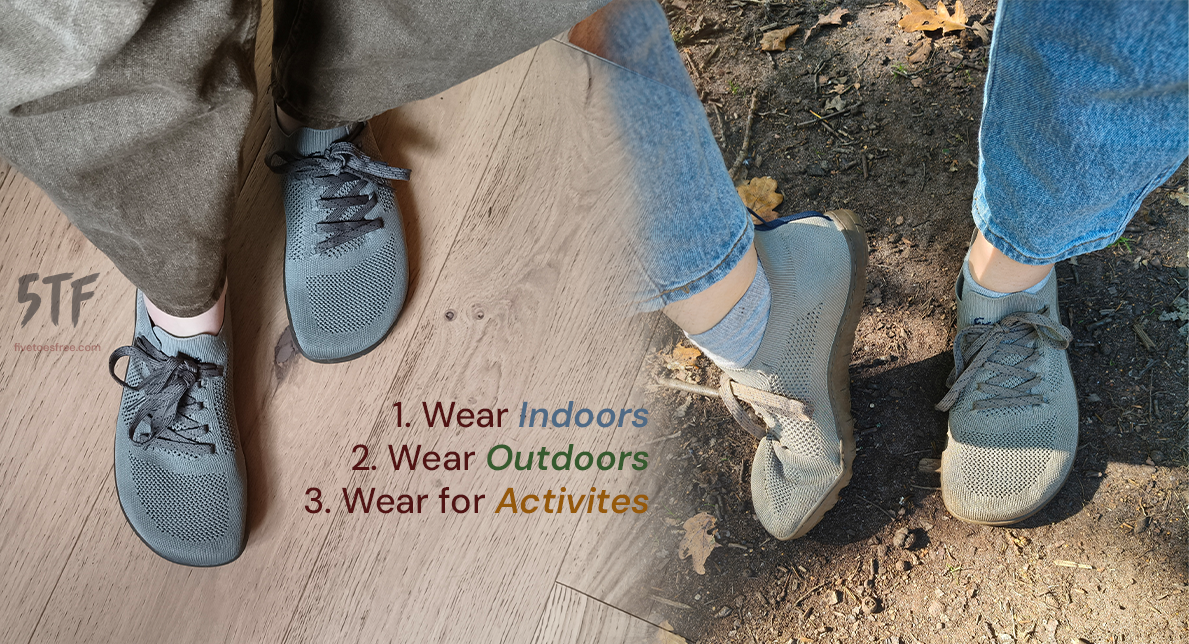
How to start the transition, once you have your barefoot shoes:
- At Home – wear daily for short periods.
- Start with 30 – 60 mins a day just walking in the house. If you feel good, incrementally increase the time in the shoes.
- If you feel fatigue or soreness, back off or keep it at this level until you adjust.
- Move on to the next step when you feel comfortable wearing them for extended periods indoors.
- Outdoors – start with short journeys walking.
- Wear then on short errands or local walks, no longer than 15-20 minutes initially. Incrementally increase this if you feel happy to do so.
- As always, back off on distance and time if you feel discomfort – maintain at this level if it’s just some mild delayed onset muscle soreness.
- Move on to the next step once you are tolerating wearing barefoot shoes outdoors for weeks, over hours at a time.
- Activities and Sport – the biggest hurdle.
- If you want to run, play sports or do physically demanding activities in your new barefoot shoes, you need to start very slowly. Jumping, running, pivoting, etc. all will feel very different in minimalist shoes.
- Running: barefoot shoes will impact everything about your running form – transitioning should be a gradual process, responding to feedback from your body. Here is a detailed guide on the transition process written by a doctor of biomechanics. Running in barefoot shoes carries the biggest risk of injury if your body is pushed beyond what it is ready for.
- Low impact sports like weight lifting or yoga will be of little issue.
Some tips for the transition:
- Add an insole (or don’t remove one if provided) if the sensation of feeling the ground is too much and you want more cushioning. Make sure the insole is appropriate for the barefoot shoe: flat, no arch support, foot shaped. This also helps fill out shoes that might feel a bit too spacious.
- Your feet are likely to change shape and size if you haven’t spent a lot of time barefoot or in minimalist shoes. You may find your shoe size changing, so keep that in mind if you want to splurge on your initial pair. Also keep this in mind if the width feels a bit roomy at the moment – you may find yourself needing that space later.
- Supplementary foot and leg exercises can really pay off, particularly if you have finding it hard to progress. The Foot Collective have some useful free resources for foot health and exercises that require no tools.
- “Transition shoes” are useful for some, but not a necessity for most. They are shoes that aren’t truly barefoot, as in they compromise in something like the sole thickness or heel-to-toe drop. Most people can do without an ‘in-between’ shoe when learning how to start wearing barefoot shoes, as long as they do the transition carefully and gradually.
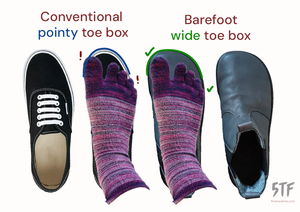
- You might want to throw away all your conventional shoes once you adapt to barefoot shoes. You may realise that pointy toe boxes are actually really uncomfortable or how the large foam sole actually wrecks your balance. Be warned. Some people can still enjoy wearing their old shoe collection, while others become utterly intolerant.
I wish you luck on however you proceed – feel free to reach out on the contact page for any advice and information!
If you are curious and want to dive deeper into the benefits of transitioning to barefoot shoes, check out the guide linked below.